
Short answer
Ask the builder to identify the event that starts the agreed construction period, the milestone that marks completion and the specific dependencies in between. Put the effect of later changes on the price and completion date in writing.
Put dates against decisions
If one schedule starts when you sign and another starts when the permit is issued, their duration estimates describe different periods. Ask for the anticipated approval period, the construction start and the handover milestone on separate lines. For each dependency, record who acts next and what evidence closes it.
Working backward from installation also helps. Ask when the team needs your window approval to place the order, when it expects delivery and which activity needs those windows first. That makes a selection deadline easier to act on than a general request to finalize finishes.
What if you want a wider kitchen window?
First, ask the designer whether the opening affects the framing or requires revised drawings. Ask the builder whether the original unit can still be changed, what credit applies and whether the replacement affects the work that follows. A supplier’s later delivery date may affect one room or the entire handover. Ask the team to identify which.
Before authorizing the change, read the revised scope, the amount added or credited and the effect on progress payments and completion. Keep the signed change order with the dated drawing and updated schedule. At the next meeting, use that version to check the next decision and its owner.
Put it into practice.
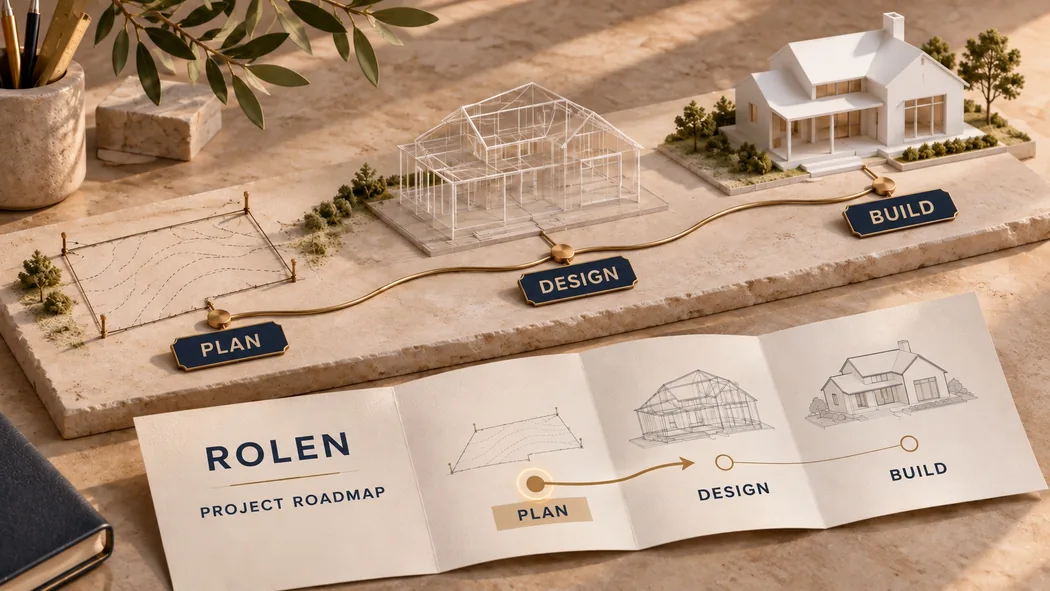
Map the decisions ahead
Use a simple sequence from property records and scope to design, review and construction. Make a note of who needs to make the next decision at each stage.